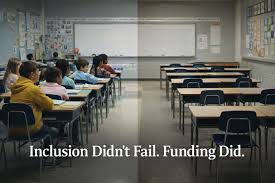
From Segregation to “Inclusion”
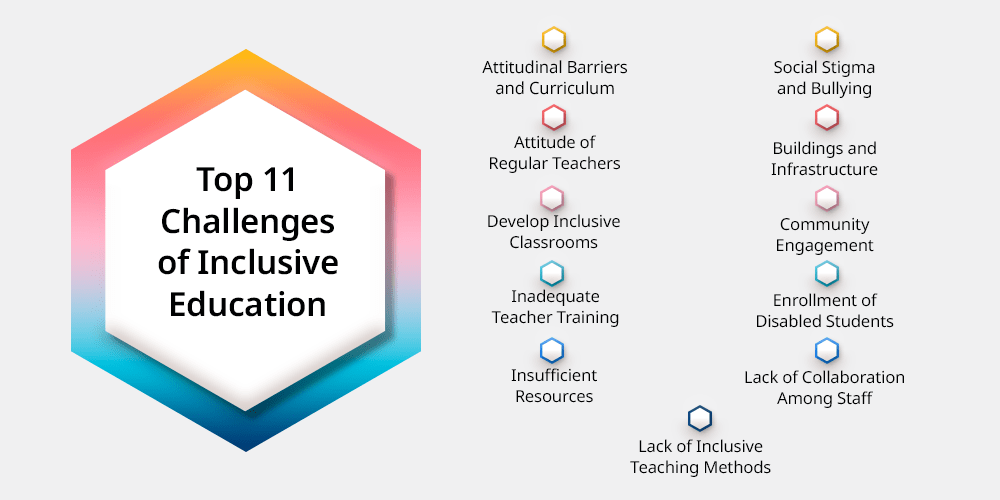
In the 70s, 80s, and 90s, children with diverse learning needs were often segregated into special education classrooms, cut off from their peers. Fast forward to today, and the pendulum has swung the other way: students are placed in mainstream classrooms under the banner of “inclusion.”
But inclusion without support is not inclusion at all. Teachers are burning out, CEAs are stretched thin, and students with complex needs are expected to thrive in environments that don’t meet them where they are.
The Reality In Classrooms
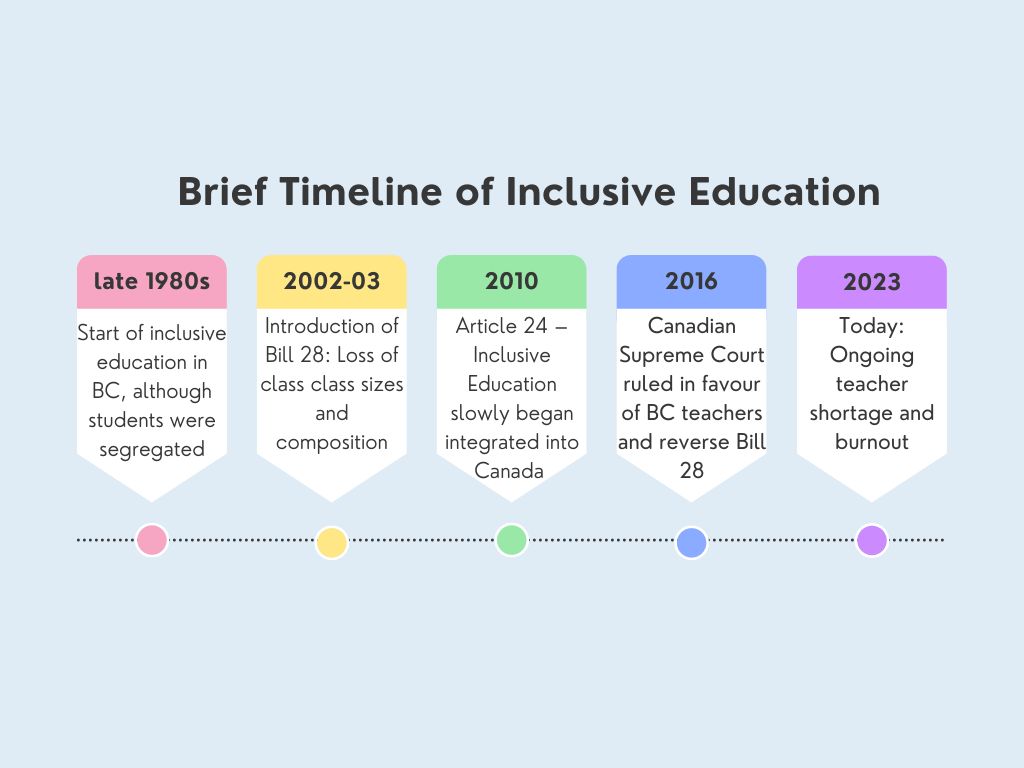
- Students functioning at an 18-month-old level are placed in Grade 6 classrooms.
- Children experiencing sensory overload are expected to regulate without proper tools or support.
- CEAs are assigned to multiple students, then pulled for one-on-one crises, leaving others unsupported.
- Resource Teachers drown in caseloads because districts refuse to hire additional staff.
This isn’t inclusion. It’s survival—for students, teachers, and support staff alike.
The Human Cost

- Teachers, Resource Teachers and Education Assistants are burning out.
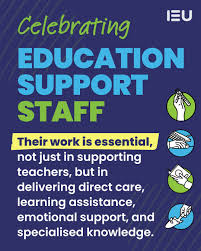
- CEAs are underpaid, undertrained, and under-supported.
- Parents feel overwhelmed, sometimes expecting schools to “fix” what they themselves struggle to manage at home.
- Students—the most vulnerable—are caught in the middle, without the consistent care they deserve.
It feels like the Titanic: the wealthy and powerful stay afloat while those at the bottom fight to keep their heads above water.
What Needs To Change
- Adequate staffing: At least two RTs per site when high behaviours are present.
- Professionalizing CEAs: A two-year diploma program with specialization in behaviour intervention.
- Living wages & full shifts: CEAs working proper 8-hour days with fair pay.
- Behaviour Consultants: Reintroduce ABA-trained specialists to bridge home and school consistency. This means having not just one or two consultants at the district level but having a consultant at each school to help Resources Teachers with overload of student cases. Consultants and BI’s onsite to help mange and create proper ABA plans to help transition between home and school. Also, Consultants and BI’s could then directly go into homes to help support family’s so they can understand why follow through on behaviour plans are key for succuss not only at school but at home to.
- True collaboration: Parents, teachers, CEAs, and RTs working together—not passing responsibility back and forth.
Call to Action

Inclusion cannot mean “throw everyone into the same classroom and hope for the best.” Nor can segregation be the answer. Real inclusion requires funding, training, and collaboration.
It’s time for government leaders, school boards, and unions to listen to those in the trenches—Teachers, CEAs, and RTs—who know what works and what doesn’t. Without systemic change, we will continue to fail families, students, and educators every single day.
Closing Thoughts
We can’t keep patching holes in a sinking ship. If we truly value our children—the future of our society—we must invest in the people who support them. Inclusion should be more than a word; it should be a promise backed by action.

 Healing In Real Time
Leave a comment